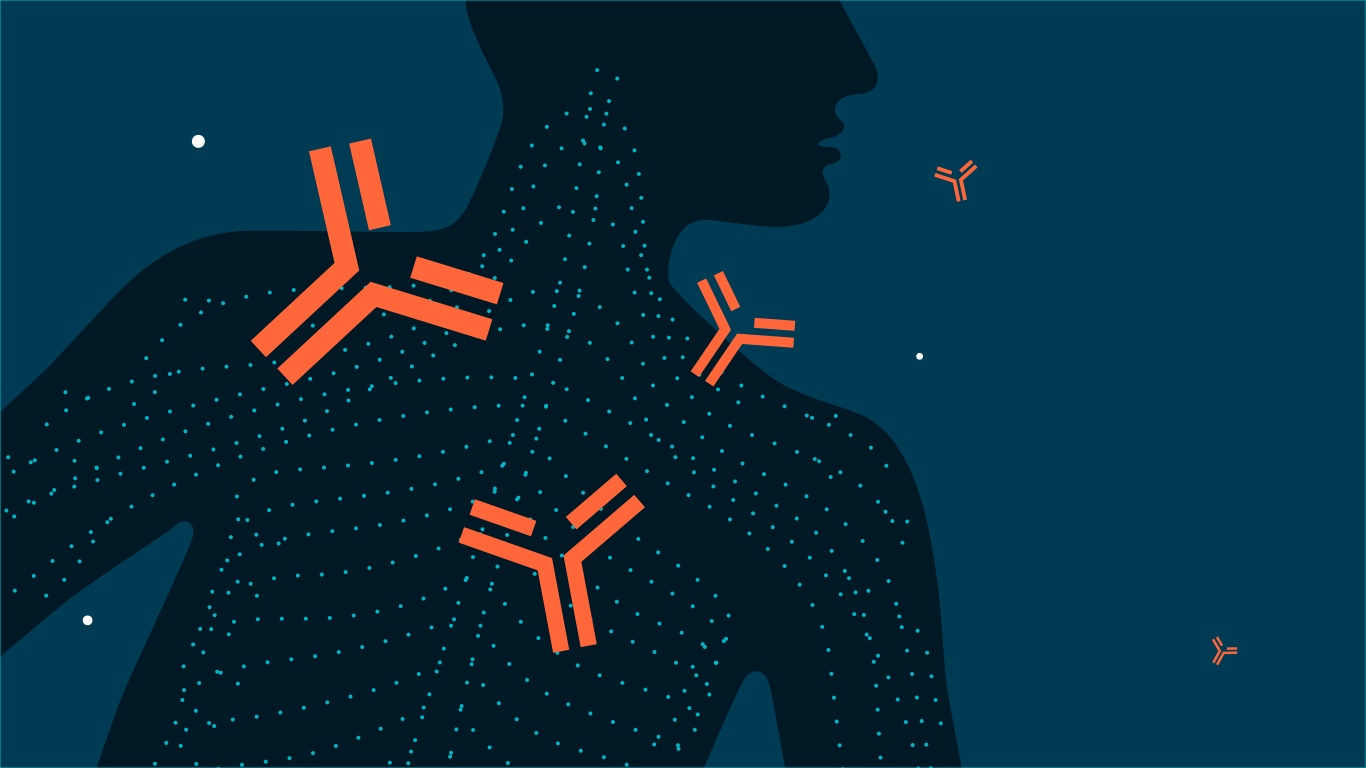
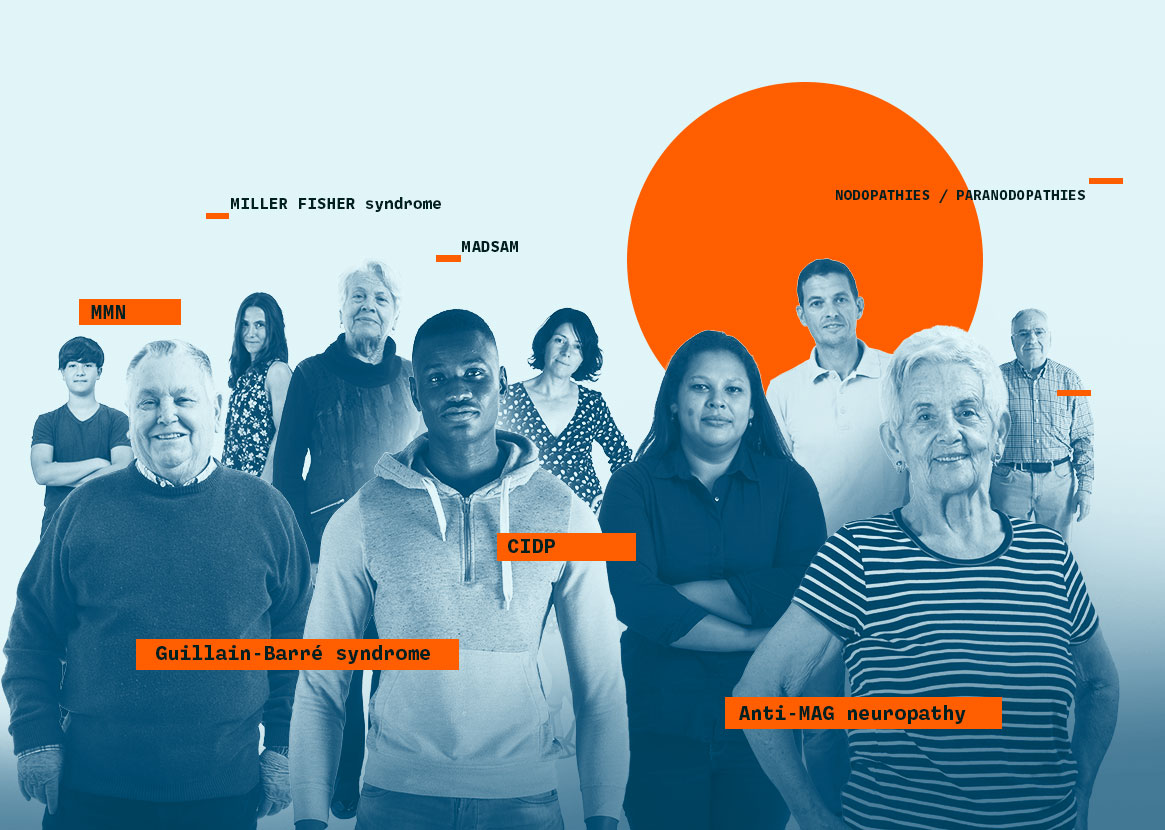
Dysimmune and inflammatory neuropathies (DINs) are a group of rare conditions in which the immune system — normally the body’s defence — mistakenly turns on its own peripheral nerves, the network that carries signals between the brain and the rest of the body. When those signals are disrupted, everyday life shifts: numbness or tingling, pain, muscle weakness, unsteadiness when walking.
Sensory disorders
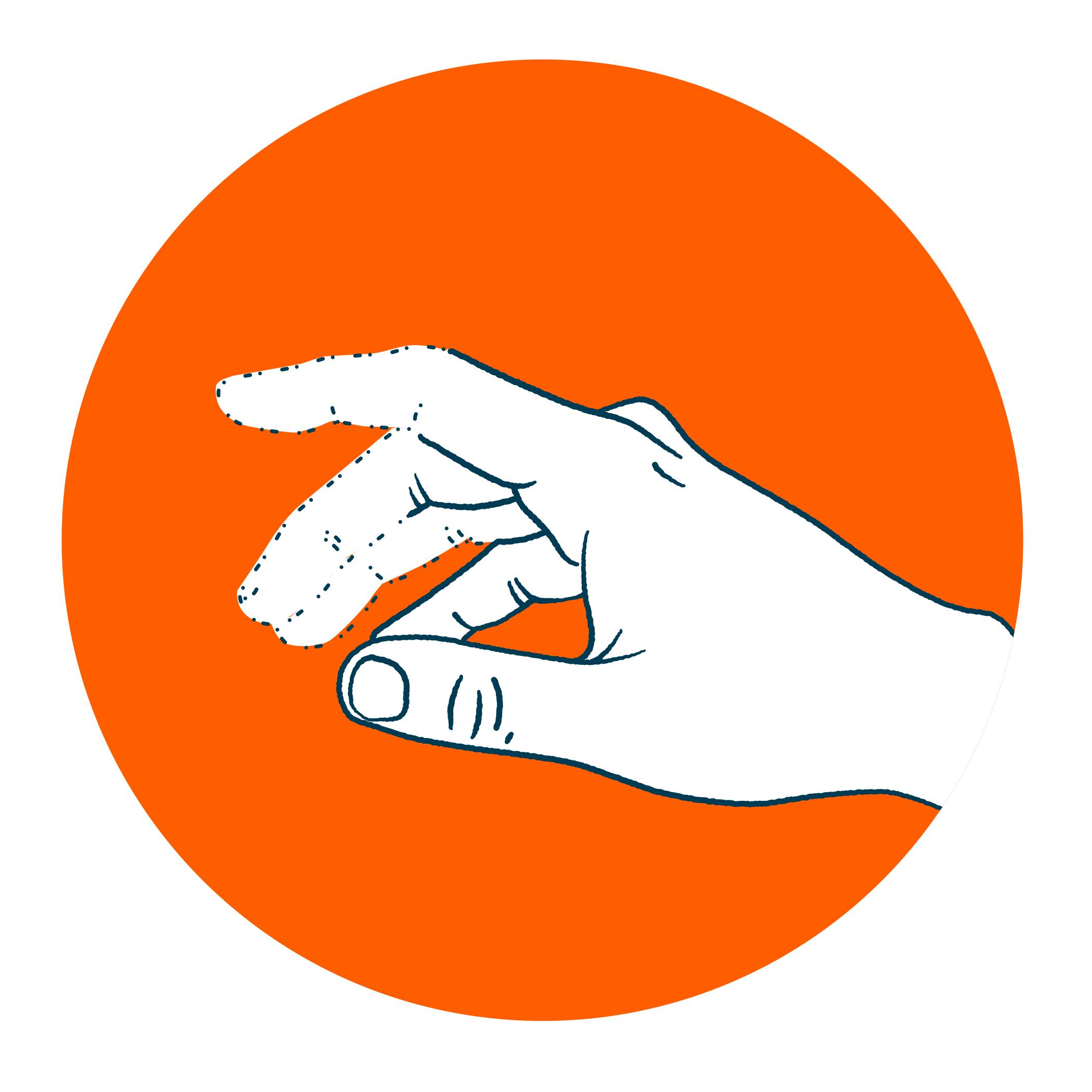
Sensory disorders change how the body reads the world. The nerves that carry feeling falter, and everyday tasks turn uncertain. Fingers can’t quite feel a button or a coin. Feet lose the ground, so each step feels less sure. And it cuts both ways. Some people stop noticing what matters — a cup that’s too hot, a blister forming. Others feel too much: tingling, burning, pain raw enough to make bedsheets unbearable at night.
Motor disorders
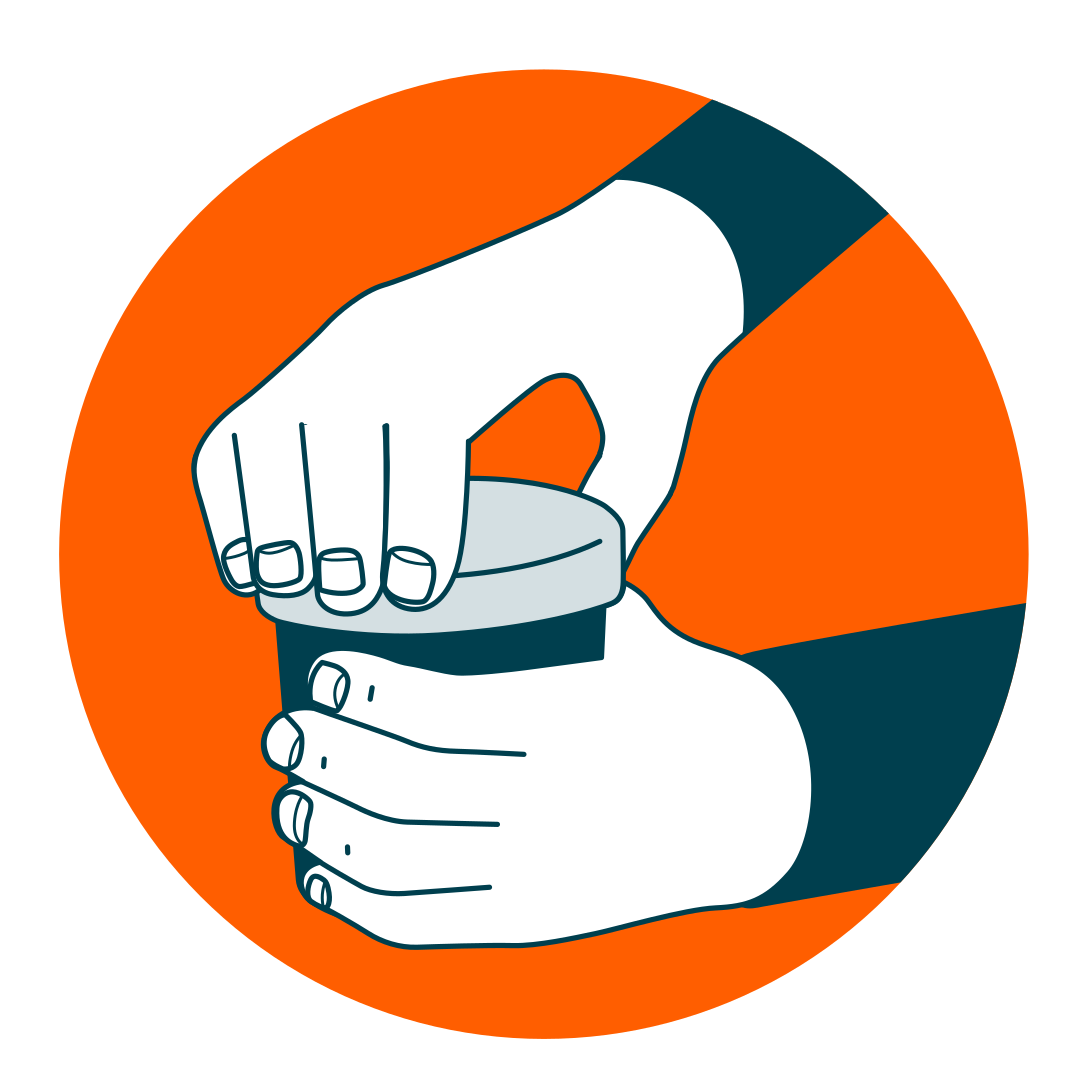
Motor disorders change what the body can do. The nerves that drive the muscles weaken, and effort stops matching intention. A jar lid won’t turn. A grip loosens around a glass. Stairs ask more than they used to. Walking grows unreliable too: a foot catches on a kerb, legs tire after a short distance. Movements that once needed no thought now have to be planned.
1.3 million
It’s roughly the number of people living with DINs worldwide. The conditions are serious, but treatment exists. It relies on something remarkably ordinary: plasma donated by other people.
Patients and their families need your help to keep these therapies within reach.
How you can help
Helping is simpler than you’d think — and any one of these makes a real difference: share a story, give what you can, or donate plasma. Each one helps keep treatment within reach for the people who need it.
Share our stories
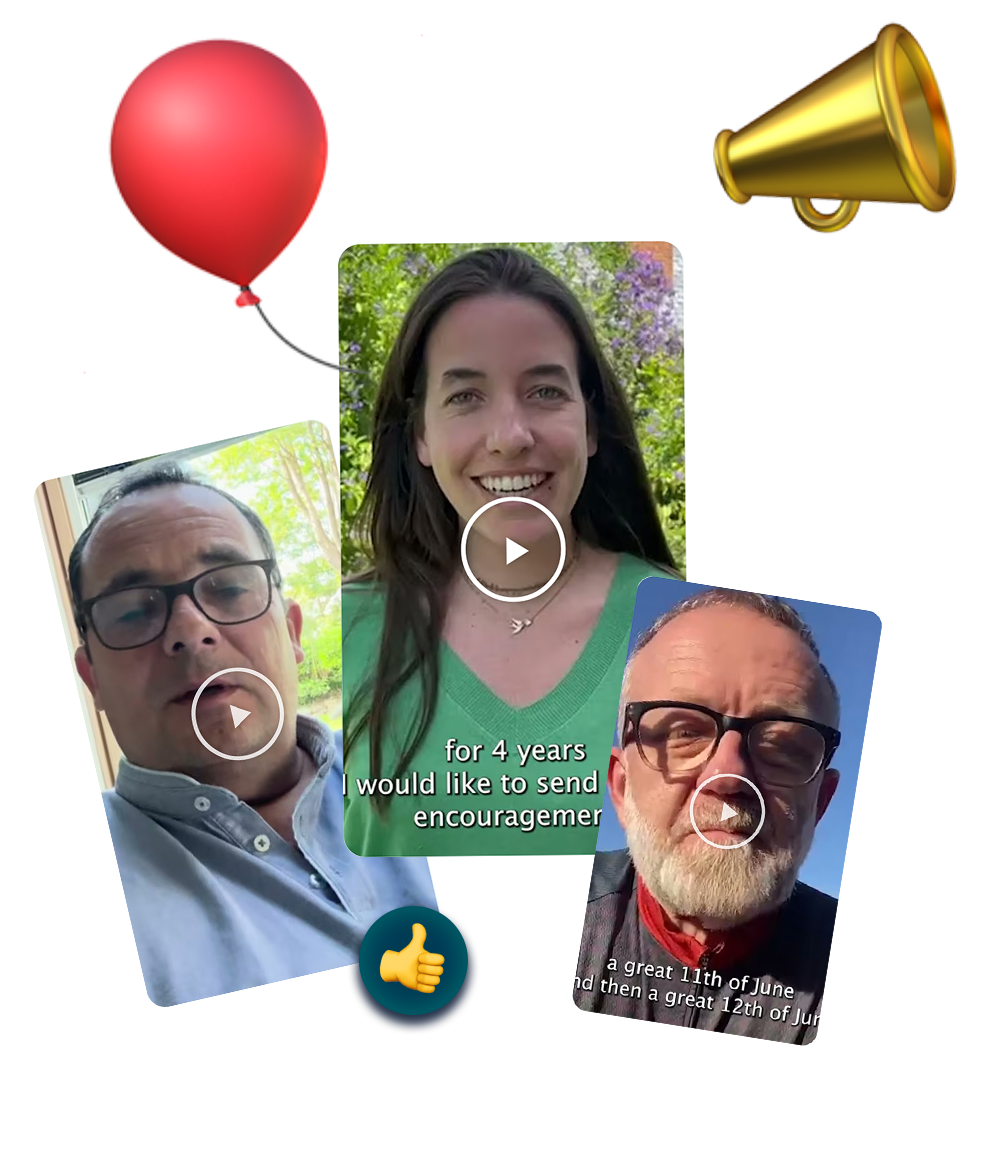
Awareness is leverage. Every time you share a story, these rare diseases reach more people. And the more they’re seen, the more weight patients carry when it comes to funding and policy. One click goes a long way.
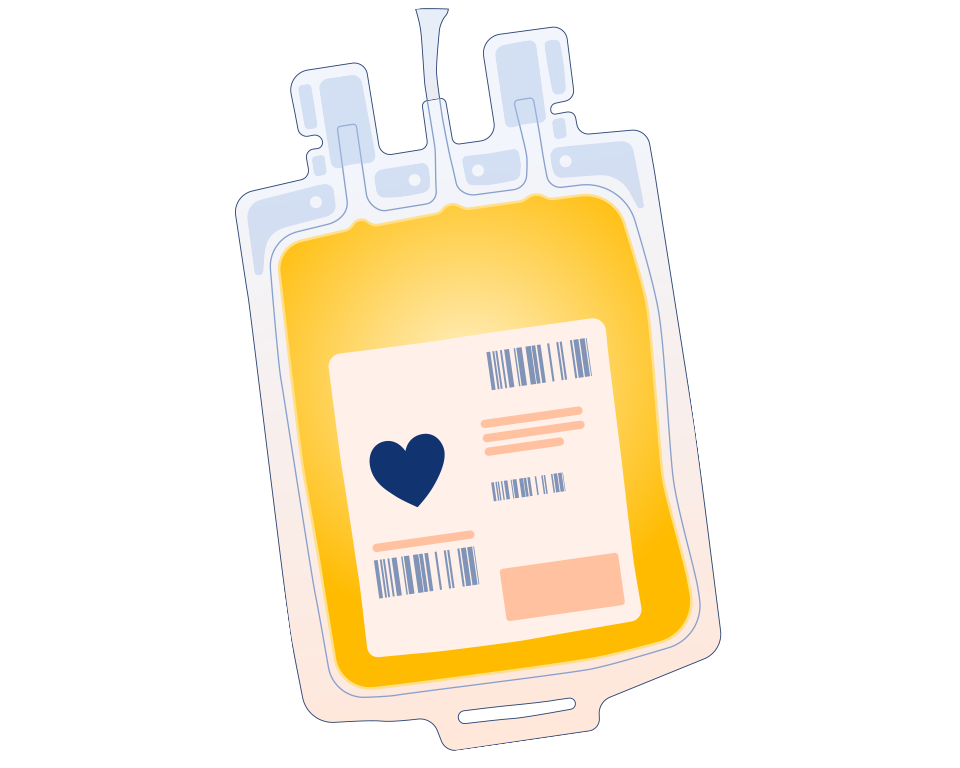
This is the one only you can give. These treatments are made from human plasma — no lab can replace it — and your body restores what you donate within days. An hour of your time can become someone’s medicine.
We use cookies to ensure that we give you the best experience on our website. If you continue to use this site we will assume that you are happy with it. Privacy policy